
ReCatalyx
ReCatalyx SludgeManage
Sludge, biosolids and fecal sludge
- Brand
- ReCatalyx
- Discipline
- Carbon, Resource Recovery & Waste-to-Energy
- Markets
- Environment · Industry · Resources & Waste · Water & Utilities
- Development status
- Product concept
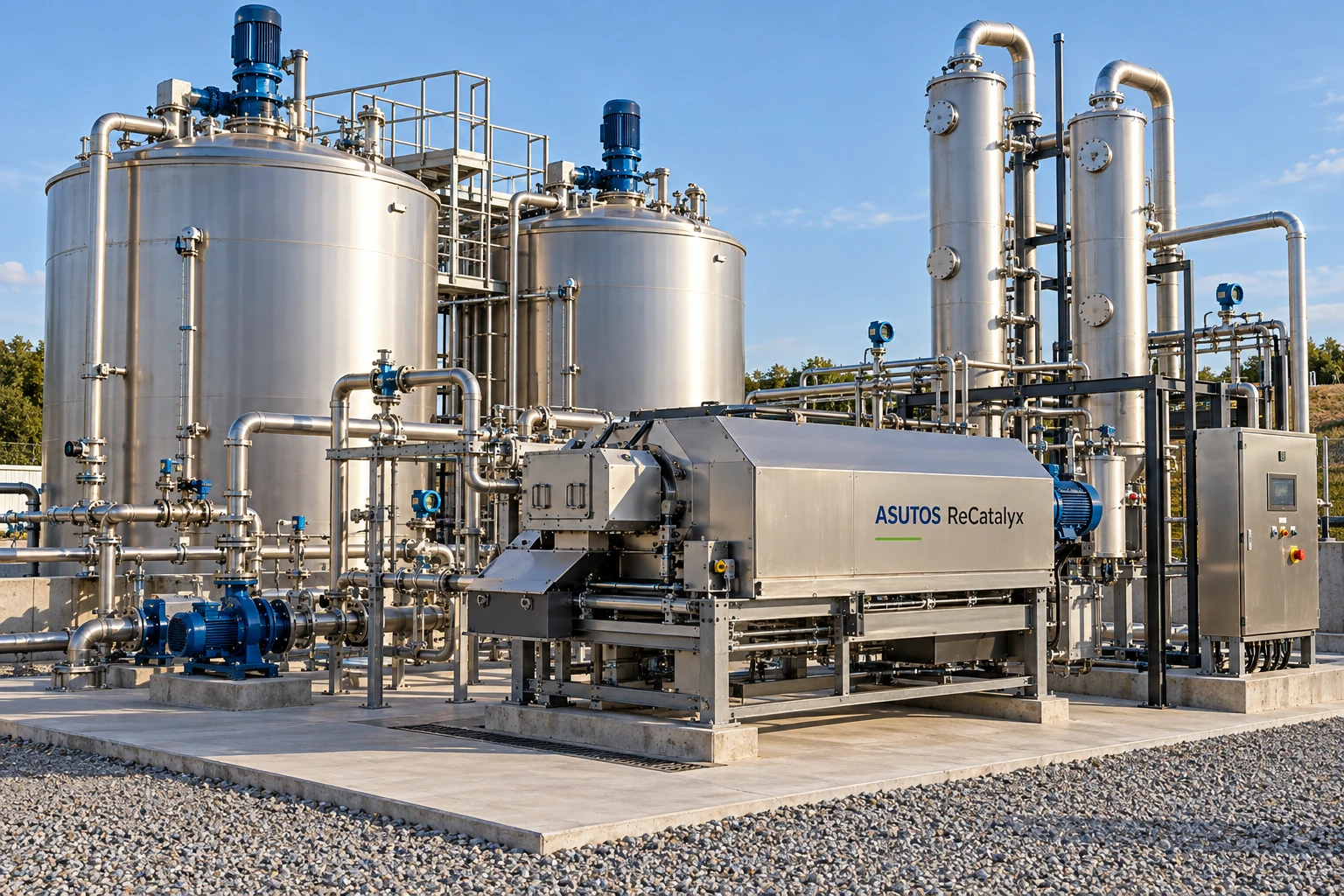
Overview
A complete sludge handling package from receiving or clarifier withdrawal to a controlled dewatered cake and treated liquid interface. Select equipment separately for municipal biological sludge, digested sludge and industrial residues. Mechanical dewatering reduces water content but does not itself establish pathogen reduction or fertilizer eligibility.
Product capabilities
- Enclosed receiving and spill containment
- coarse screen and grit removal
- buffer tank with mixer
- progressive cavity or other duty-qualified pumps
- thickener
- polymer make-up and dosing
Feedstock and input
Characterized municipal or industrial sludge with measured solids, settleability, rheology, grit, metals and chemical compatibility. Keep incompatible industrial loads separate.
Core components
- Enclosed receiving and spill containment
- coarse screen and grit removal
- buffer tank with mixer
- progressive cavity or other duty-qualified pumps
- thickener
- polymer make-up and dosing
- belt press, screw press or qualified decanter
- filtrate tank
- cake conveyor
- weighing
- odor extraction and treatment
- wash-water system
- sampling and PLC
Process
Receive and screen; equalize; thicken where justified; condition; dewater; weigh and transfer cake; route filtrate to assessed treatment.
Design basis
Run settling and polymer trials. Specify hydraulic and dry-solids loads, cake target, solids capture, wash-water demand, storage duration and return-liquor impacts.
IoT measurements
Wet and dry-solids intake, polymer, press load, filtrate, cake samples and maintenance.
IoT architecture
Local PLC/HMI, buffered historian and secure gateway; remote alarms and reports. Cloud loss does not stop local control. See common architecture and acceptance tests.
Future capability
Detect inventory, pump and separation deviations; reconcile dry-solids movement with laboratory evidence.
Typical applications
U.S. wastewater utilities, industrial effluent plants and centralized residuals operators; global municipal and industrial sludge programs.
Pilot validation
Witness solids capture and cake consistency trials; verify liquid balance, odor containment, guarding and lawful downstream disposition.
Problem and deployment scope
Sludge, biosolids and fecal sludge
How it works
- Enclosed receiving and spill containment
- coarse screen and grit removal
- buffer tank with mixer
- progressive cavity or other duty-qualified pumps
- thickener
- polymer make-up and dosing
Architecture
Confirm data sources, field interfaces and operating requirements during discovery. Integration compatibility is reviewed for each deployment.
Integrations
Interface availability and supported protocols require product-specific confirmation.
Deployment
Scope, installation, security, acceptance criteria and training are agreed with the project team.
Use cases
U.S. wastewater utilities, industrial effluent plants and centralized residuals operators; global municipal and industrial sludge programs.
Documentation
This page describes the published product concept. Validated drawings, datasheets, compatibility and deployment documentation are supplied following technical review.