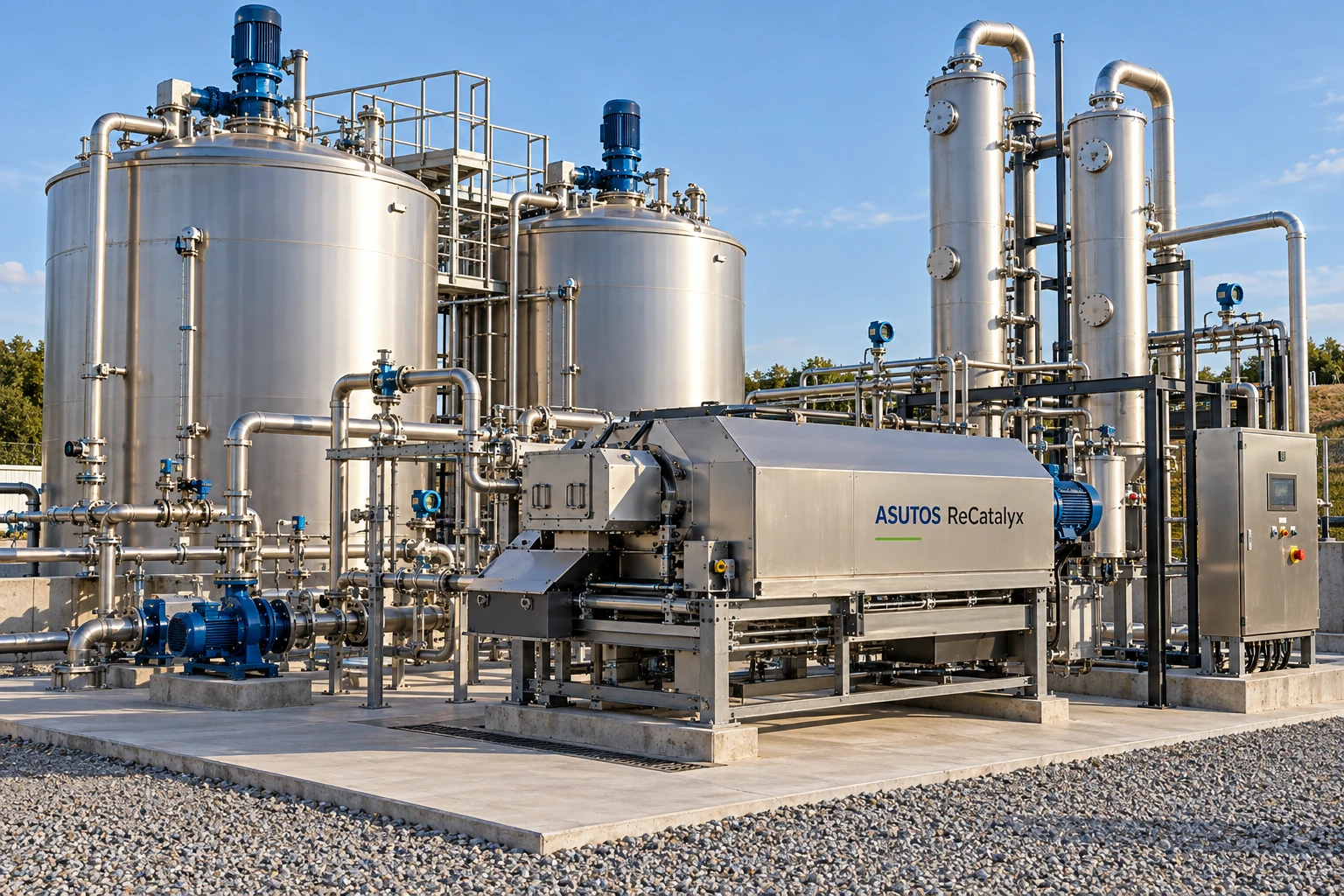
ReCatalyx
ReCatalyx EsterReact
Convert qualified oils to biodiesel by a selected reaction route.
- Brand
- ReCatalyx
- Discipline
- Carbon, Resource Recovery & Waste-to-Energy
- Markets
- Environment · Industry · Resources & Waste · Water & Utilities
- Development status
- Product concept
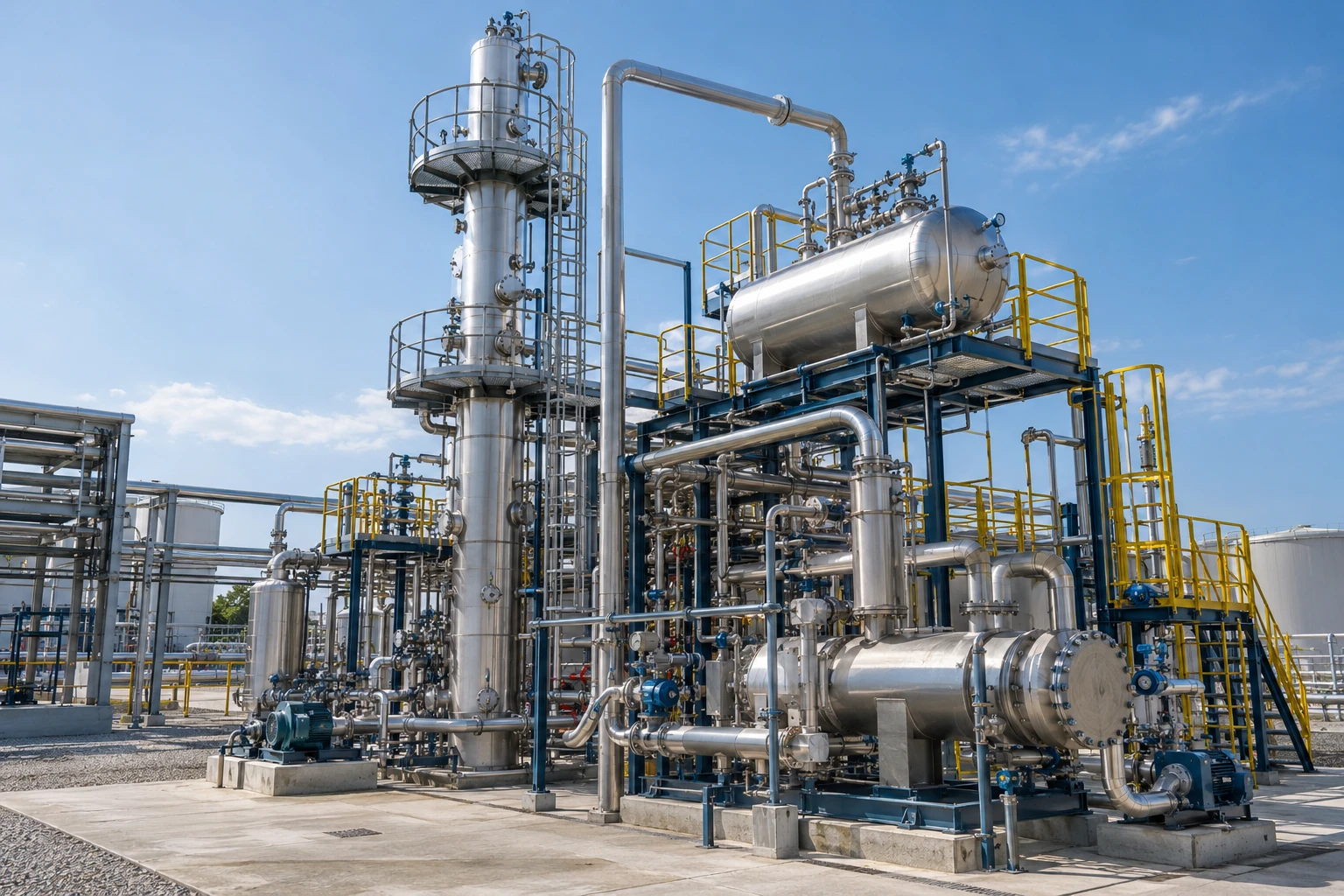
Overview
Convert qualified oils to biodiesel by a selected reaction route.
Product capabilities
- Pretreatment
- agitated reactor
- alcohol and catalyst dosing
- separation
- washing or polishing and alcohol recovery
Core components
- Pretreatment
- agitated reactor
- alcohol and catalyst dosing
- separation
- washing or polishing and alcohol recovery
Design basis
Free fatty acids, moisture, feed variability and fuel specification; chemical-compatible alloy and seals, hazardous-area controls.
IoT measurements
Temperature, dosing ratio, level, agitator load and fuel laboratory release.
IoT architecture
Project-specific instruments connect to local PLC/HMI and a secure gateway with buffered history. Local control remains independent of cloud connectivity.
Typical applications
BioDiesel, BioRefinery
Pilot validation
Final sizing, protection and acceptance criteria require the project datasheet, OEM qualification and agreed FAT/SAT tests.
Problem and deployment scope
Convert qualified oils to biodiesel by a selected reaction route.
How it works
- Pretreatment
- agitated reactor
- alcohol and catalyst dosing
- separation
- washing or polishing and alcohol recovery
Architecture
Confirm data sources, field interfaces and operating requirements during discovery. Integration compatibility is reviewed for each deployment.
Integrations
Interface availability and supported protocols require product-specific confirmation.
Deployment
Scope, installation, security, acceptance criteria and training are agreed with the project team.
Use cases
BioDiesel, BioRefinery
Documentation
This page describes the published product concept. Validated drawings, datasheets, compatibility and deployment documentation are supplied following technical review.