ReCatalyx
ReCatalyx BioSolid
Sludge, biosolids and fecal sludge
- Brand
- ReCatalyx
- Discipline
- Carbon, Resource Recovery & Waste-to-Energy
- Markets
- Environment · Industry · Resources & Waste · Water & Utilities
- Development status
- Product concept
Overview
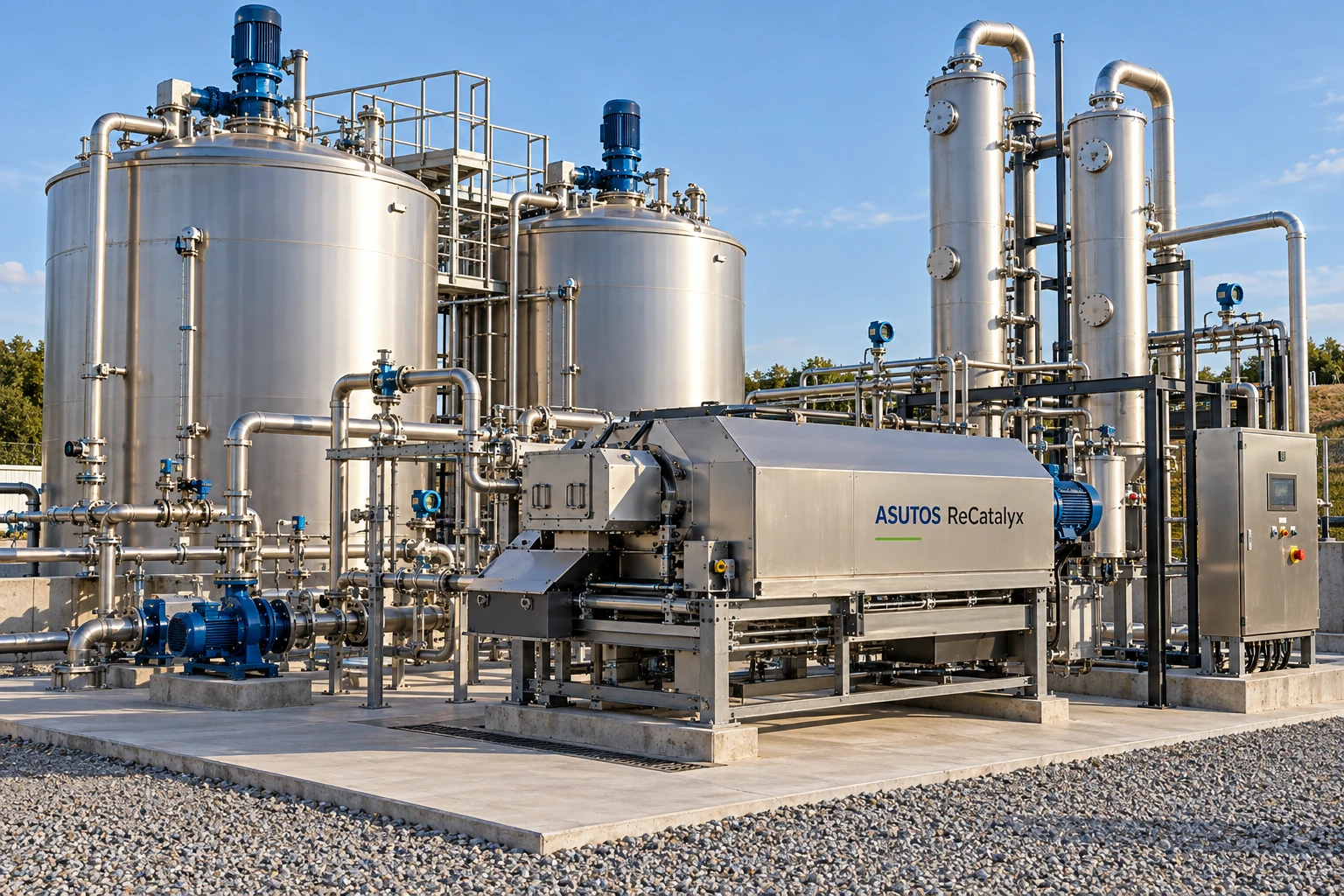
A biosolids stabilization and conditioning package for a defined permitted outlet. Choose qualified digestion, composting, lime stabilization or controlled drying according to feed, pathogen target and use. These are alternative engineered routes, not automatically interchangeable modules. A Class A designation, where applicable, does not by itself satisfy every reuse obligation.
Product capabilities
- Feed buffer
- route-specific stabilizer, composting aeration or thermal dryer
- temperature and residence monitoring
- dewatering where required
- heat exchanger and dryer air treatment
- dust collection
Feedstock and input
Domestic sewage sludge or already digested biosolids with representative pathogen, nutrient, metals and relevant contaminant testing.
Core components
- Feed buffer
- route-specific stabilizer, composting aeration or thermal dryer
- temperature and residence monitoring
- dewatering where required
- heat exchanger and dryer air treatment
- dust collection
- fire protection
- controlled product cooling
- covered storage
- sampling and batch traceability
Process
Qualify feed; apply the selected treatment; verify pathogen and vector-attraction requirements; condition and document the product; release only to a permitted outlet.
Design basis
Set moisture and storage limits, route validation, heat demand, odor control, contaminant testing, transport and seasonal outlet capacity.
IoT measurements
Treatment conditions, moisture, pathogen and pollutant laboratory results, batch release and outlet records.
IoT architecture
Local PLC/HMI, buffered historian and secure gateway; remote alarms and reports. Cloud loss does not stop local control. See common architecture and acceptance tests.
Future capability
Track treatment history and flag incomplete evidence; qualified personnel authorize release.
Typical applications
U.S. utilities and permitted biosolids service operators; global facilities with approved nutrient recovery or disposal outlets.
Pilot validation
Demonstrate route-specific treatment conditions, independent product testing and compliant outlet records. No automatic PFAS destruction or unrestricted fertilizer claim.
Problem and deployment scope
Sludge, biosolids and fecal sludge
How it works
- Feed buffer
- route-specific stabilizer, composting aeration or thermal dryer
- temperature and residence monitoring
- dewatering where required
- heat exchanger and dryer air treatment
- dust collection
Architecture
Confirm data sources, field interfaces and operating requirements during discovery. Integration compatibility is reviewed for each deployment.
Integrations
Interface availability and supported protocols require product-specific confirmation.
Deployment
Scope, installation, security, acceptance criteria and training are agreed with the project team.
Use cases
U.S. utilities and permitted biosolids service operators; global facilities with approved nutrient recovery or disposal outlets.
Documentation
This page describes the published product concept. Validated drawings, datasheets, compatibility and deployment documentation are supplied following technical review.