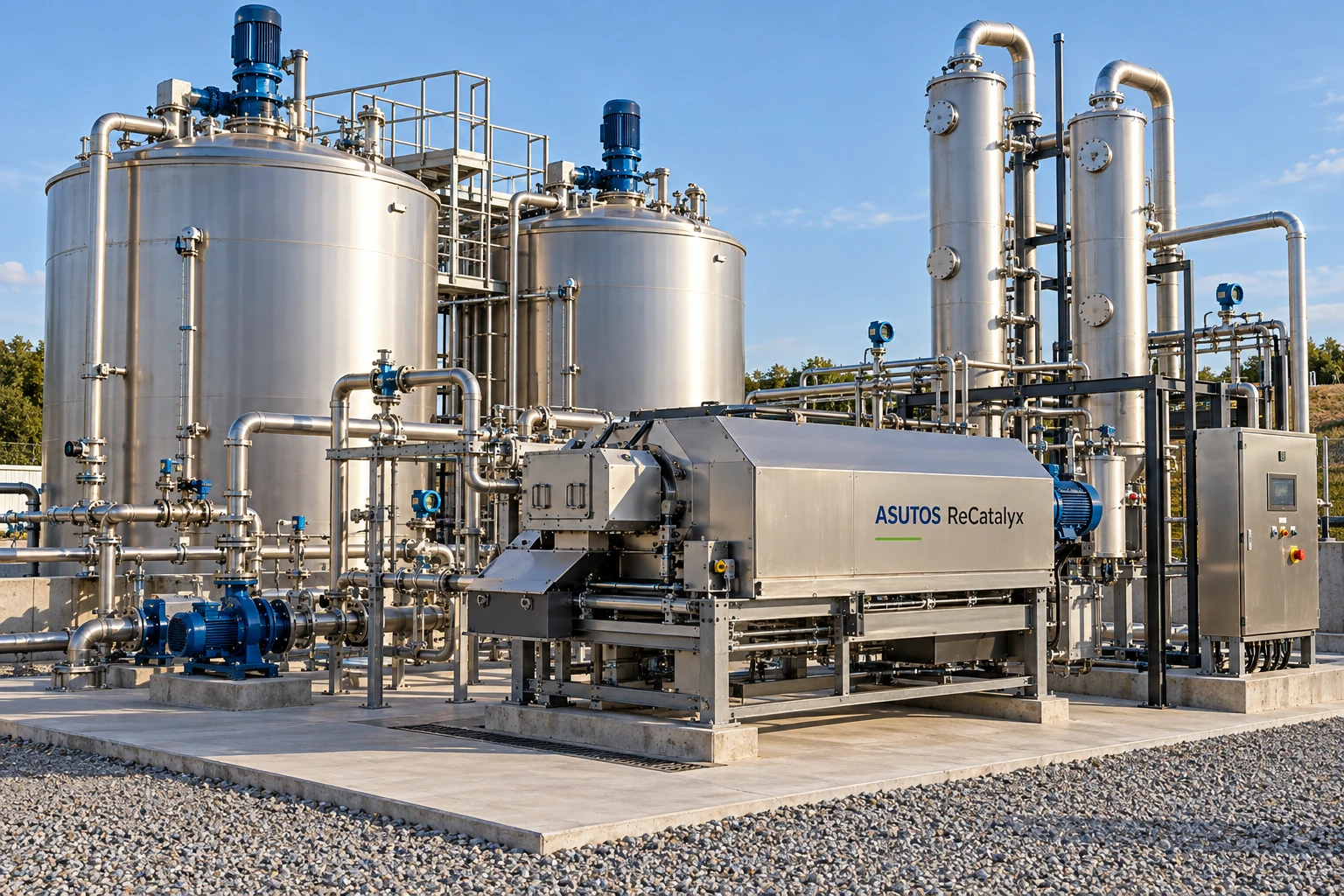
ReCatalyx
ReCatalyx BioRefinery
Renewable fuels and ethanol
- Brand
- ReCatalyx
- Discipline
- Carbon, Resource Recovery & Waste-to-Energy
- Markets
- Environment · Industry · Resources & Waste · Water & Utilities
- Development status
- Product concept
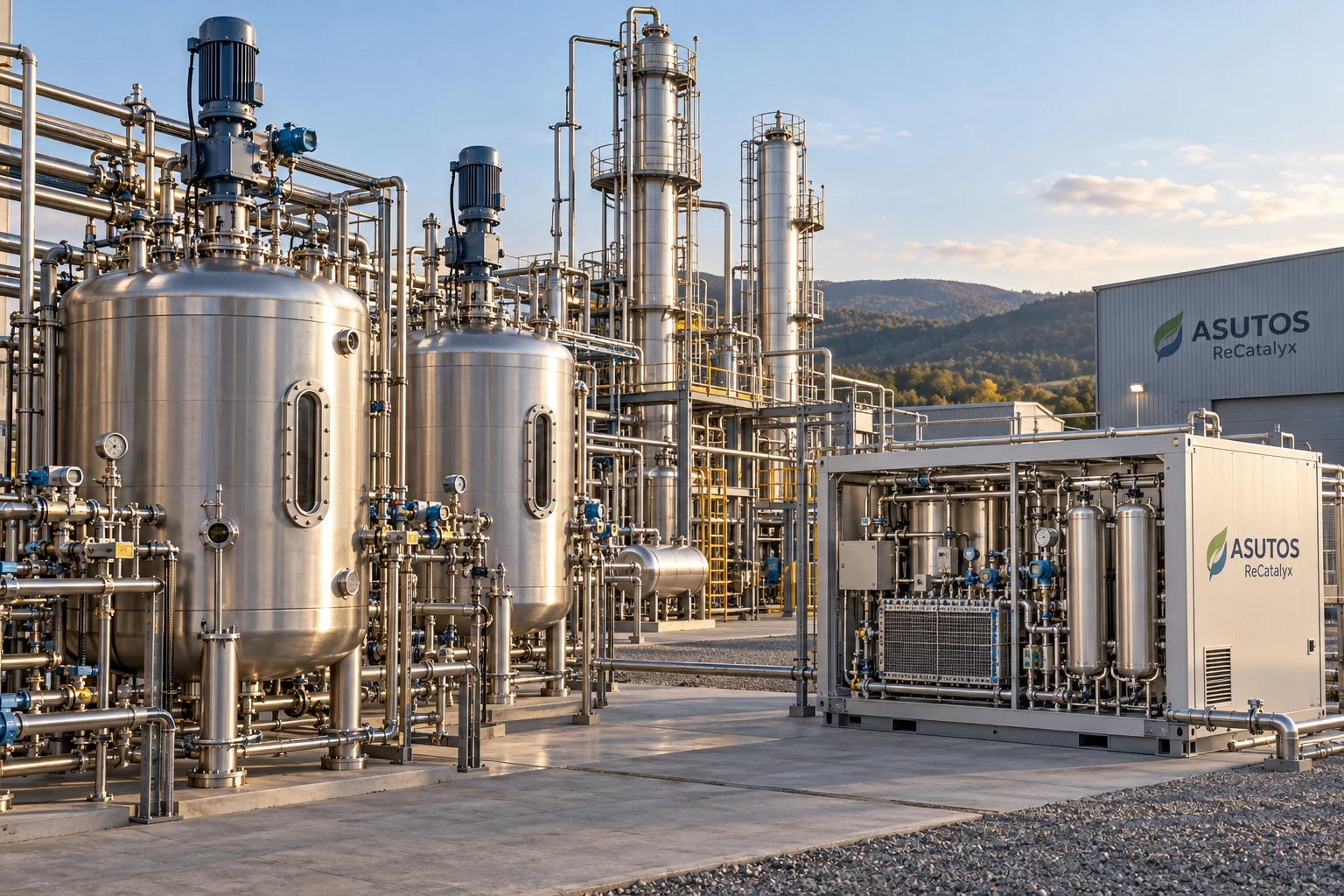
Overview
An integrated biorefinery development package combining qualified feed conversion routes, utilities and coproduct recovery. Route selection follows feed chemistry and buyer specifications. Asutos coordinates interfaces while specialist suppliers retain licensed process scope.
Product capabilities
- Feed qualification and storage
- selected pretreatment and licensed conversion island
- agitators
- reactors
- separation or distillation
- polishing
Feedstock and input
Characterized oils, sugars, compatible process gas or selected wet organic feed; each route has its own acceptance envelope.
Core components
- Feed qualification and storage
- selected pretreatment and licensed conversion island
- agitators
- reactors
- separation or distillation
- polishing
- water utilities
- steam and heat integration
- coproduct handling
- emissions and residue treatment
- PLC and IoT
Process
Choose qualified routes; integrate conversion and utilities; test products; account for coproducts and residues.
Design basis
Complete feed trials, route mass balances, hydrogen or catalyst needs, net energy and outlet contracts. Match materials to corrosion and pressure conditions.
IoT measurements
Feed and coproduct batches, route-specific quality, process utilities, net energy and verified outlet records.
IoT architecture
Local PLC/HMI, buffered historian and secure gateway; remote alarms and reports. Cloud loss does not stop local control. See common architecture and acceptance tests.
Future capability
Compare measured performance and utility demand; propose reviewed maintenance and operating improvements.
Typical applications
U.S. agricultural, food processing and industrial fuel projects; global locations with dependable feed, utilities and qualified outlets.
Pilot validation
Witness performance, buyer product tests, net utility consumption, emissions and lawful residual outlets.
Problem and deployment scope
Renewable fuels and ethanol
How it works
- Feed qualification and storage
- selected pretreatment and licensed conversion island
- agitators
- reactors
- separation or distillation
- polishing
Architecture
Confirm data sources, field interfaces and operating requirements during discovery. Integration compatibility is reviewed for each deployment.
Integrations
Interface availability and supported protocols require product-specific confirmation.
Deployment
Scope, installation, security, acceptance criteria and training are agreed with the project team.
Use cases
U.S. agricultural, food processing and industrial fuel projects; global locations with dependable feed, utilities and qualified outlets.
Documentation
This page describes the published product concept. Validated drawings, datasheets, compatibility and deployment documentation are supplied following technical review.