Digital Twin & Simulation
How to plan a water utility Digital Twin
- Discipline
- Digital Twin & Simulation
- Markets
- Building & Infrastructure · Business Services · Cities & Government · Environment · Industry · Resources & Waste · Transportation · Water & Utilities

Overview
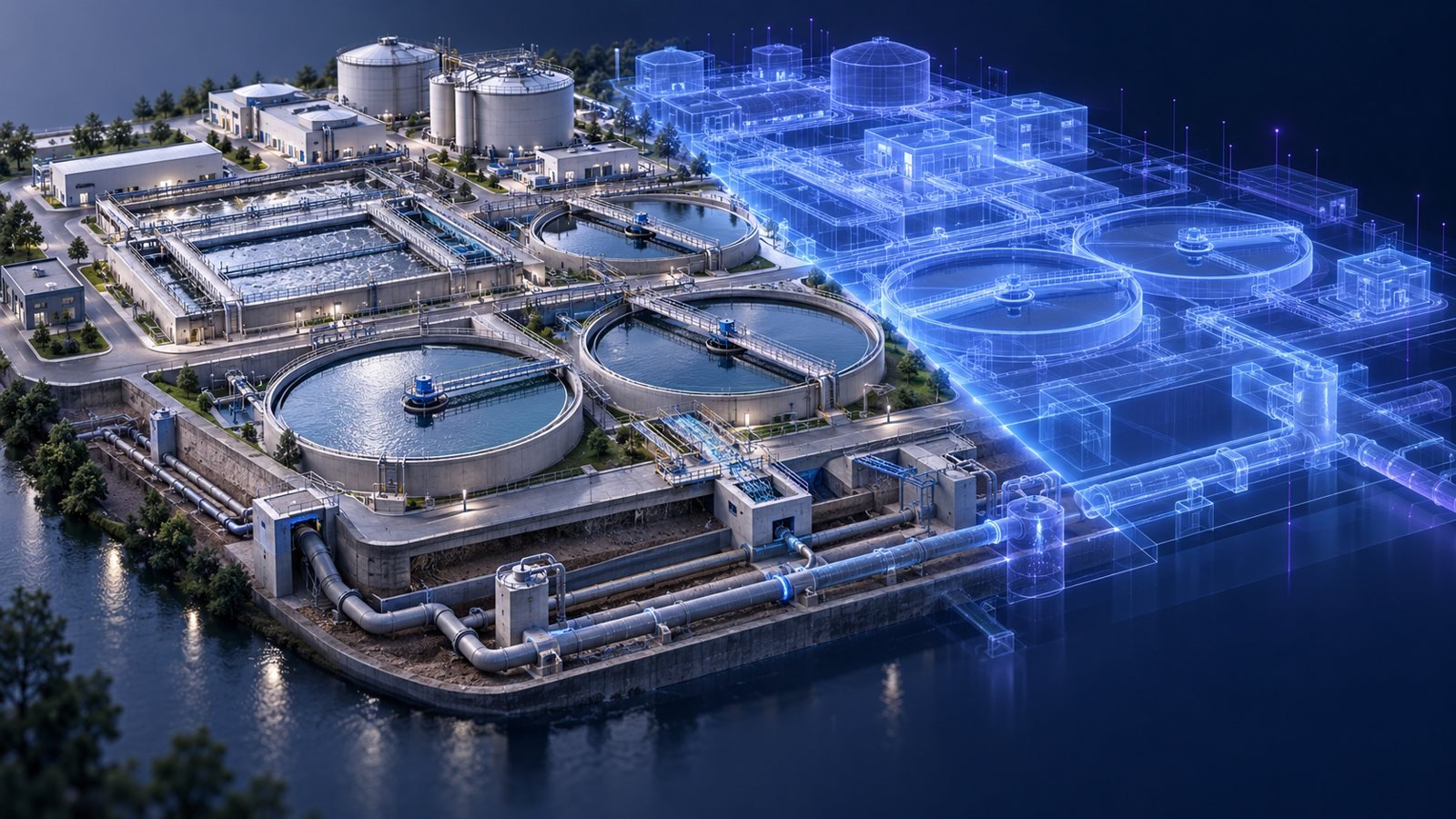
A water utility Digital Twin should start with a specific operating question. Examples include comparing demand scenarios, identifying data gaps or planning renewal. Define the system boundary and distinguish physical asset records, hydraulic assumptions, sensor observations and operational decisions.
Create an asset identifier strategy that joins GIS, the hydraulic model and telemetry. Review elevations, pipe properties, demand allocations and boundary conditions with the engineering team. Time-series data needs units, timestamps, quality flags and a documented clock convention. Keep uncertain or stale data separate from accepted observations.
Use a controlled baseline and test scenarios before exposing results to operators. Calibration, uncertainty and operational constraints need engineering review; a browser simulation is not a validated hydraulic model. Decide who owns model updates, how incidents are reviewed and how suggested actions become authorised work orders.
A practical pilot can focus on one operating district and one question. Gather the GIS network, accepted asset properties, boundary conditions and representative demand assumptions. Compare modelled behaviour with accepted field observations for an agreed period. Record instrument quality, missing readings and changes to operating conditions so that an apparent mismatch is investigated rather than automatically attributed to a single pipe or pump.
Separate three views: observed data, the accepted baseline model and hypothetical scenarios. Show the observation time and quality flag beside a reading. Record the scenario assumptions and model revision beside a simulated result. If data is stale or unavailable, the interface should show the gap. Do not quietly replace missing observations with generated values that appear to be live measurements.
EPA publishes EPANET documentation for water distribution modelling. A project may use an appropriate hydraulic engine alongside GIS and telemetry, but integration still requires engineering review of inputs, calibration and operating constraints. Decide how an operator requests a simulation, who reviews the result and which approved workflow implements a resulting action. Keep a record of the decision and its supporting evidence.
Further reading
Key considerations
- Define the operating question and asset boundary.
- Record input quality, units, ownership and revision.
- Agree review responsibilities and acceptance criteria.
- Verify project-specific requirements before implementation.
Related solutions
Product capabilities
- Define the operating question and asset boundary.
- Record input quality, units, ownership and revision.
- Agree review responsibilities and acceptance criteria.
- Verify project-specific requirements before implementation.